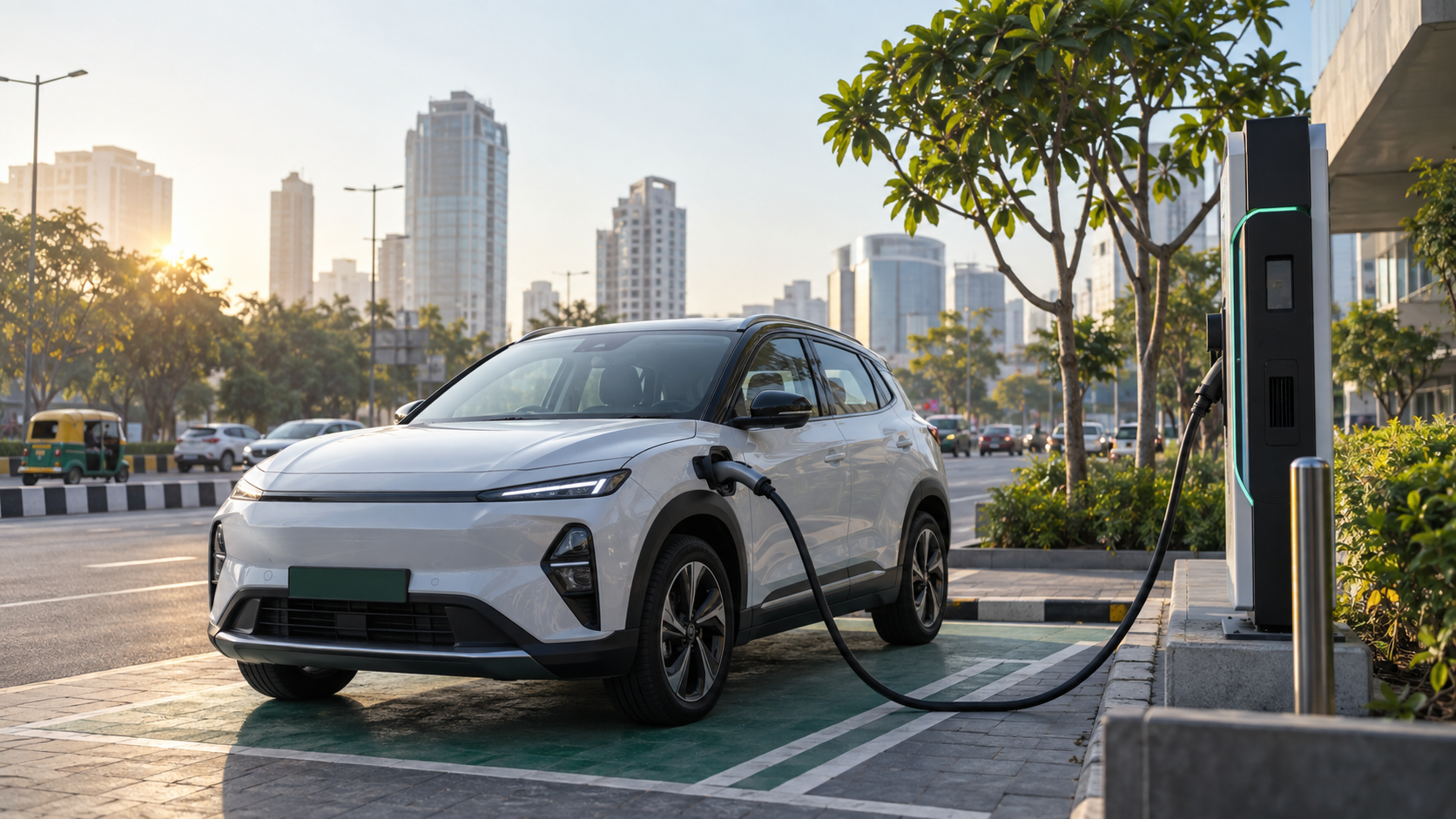
Looking for EV charging stations by city in India? You are not alone — charging access is the first question most Indian EV buyers ask after range. The good news: India's public charging network has grown into a structured, multi-operator system, and official data now tracks it station by station.
A Ministry of Power dataset, sourced from the Bureau of Energy Efficiency, lists 39,641 charging station records across 36 states and union territories, spanning 70 different charge point operators. That data is updated at source every 4 hours, which means verified, city-level charging information is more accessible than ever.
In this guide, we break down what verified operator coverage looks like across major Indian cities, which connector types you will actually encounter, and how to use locator tools to find a working charger near you.
Why Verified Charging Data Matters in India
Anyone who has driven an EV in India knows the frustration of arriving at a charger that is offline, occupied or incompatible. Availability and pricing can change quickly, which is why the best locator platforms now display the operator, connector type, price per kWh, opening hours and a last-verified date for every station.
Community-maintained databases such as Open Charge Map power several city-level listings, and platforms like Ecogears combine operator data, public listings, user submissions and manual checks. The practical takeaway: always confirm on arrival, and call the station phone number listed before a long trip.
EV Charging Stations in Delhi: India's Densest City Network
Delhi has the highest charger density of any Indian city centre, according to EVSelect.in, which lists 45+ live charging locations in the capital. The city's network was built out early through EESL, the DISCOMs and the Delhi EV Policy.
What You'll Find in Delhi
EESL dominates central Delhi with numerous Type 2 tethered AC points rated up to 15 kW and 22 kW, concentrated around Connaught Place, Shankar Market, Lodi Colony and the Diplomatic Enclave. Many sit in NDMC parking areas, making them easy to pair with errands.
For faster top-ups, Statiq operates DC fast chargers up to 60 kW with CCS2 connectors at spots like Defence Colony, Moolchand Metro Station, IIT Delhi and The Suryaa in New Friends Colony. Jio-BP Pulse also runs 60 kW CCS2 points at GTB Nagar and Azadpur metro station parking, listed at ₹20.99 per kWh.
Aerocity's hotel cluster — including JW Marriott, Aloft and Hotel Pullman — hosts Chargezone DC chargers up to 30 kW, useful while travelling to or from the airport. In West Delhi, Statiq BSES hubs operate at Peeragarhi and Paschim Vihar metro stations, and Ecoplug covers Punjabi Bagh and Rani Bagh.
Mumbai, Pune and Ahmedabad: Western India's Charging Corridor
Verified listings show strong operator presence across Maharashtra and Gujarat. In Mumbai, Adani operates a 24/7 station at Terminal-2 of Chhatrapati Shivaji Maharaj International Airport, positioned for both commercial and private EVs.
In Pune, Aarna Motors runs a 7.4 kW AC point near Katraj, easy to spot from UNNATI Enclave on the Gangadham–Shatrunjay Road. In Ahmedabad, Adani has a 7.4 kW AC charger on Ashram Road near H.K. Arts College in Ellisbridge — a convenient mid-city stop.
Bengaluru and Chennai: South India's Tech-Forward Networks
Bengaluru's verified stations include Adani chargers at The Pride Hotel on Richmond Road (24/7) and a 3.3 kW AC point in Hebbal near the bus depot. Chennai listings include an Ather Grid Level 2 charger in Nungambakkam, open 7 AM to 11 PM at ₹15 per kWh — handy for Ather scooter owners and other Type 2 users.
Ather Grid also extends into smaller markets, with a verified 3.3 kW AC station listed in Hathras, Uttar Pradesh, showing that two-wheeler-focused networks now reach well beyond the metros.
East and Northeast India: Growing Beyond the Metros
Assam demonstrates how charging coverage is spreading into the Northeast. A Plus Charge operates a 3.3 kW AC point at Zoo Tiniali in Guwahati (₹13 per kWh) and a 30 kW DC fast charger with a CCS2 connector on Old Lakhipur Road in Silchar, open 7 AM to 11 PM at ₹22 per kWh.
Even the Andaman and Nicobar Islands appear in the Ministry of Power dataset, with IOCL Type 2 AC points (7.4 kW) around Port Blair and Swaraj Dweep, plus a Tata Power 25 kW CCS2 charger at Gennext Motors in Pahargaon. The lesson for buyers: check your specific city and district, because coverage now extends far beyond Tier-1 hubs.
Understanding Connector Types at Indian Charging Stations
Knowing your connector is half the battle. Based on verified listings across India, here is what you will encounter:
Type 2 (AC) — The Everyday Workhorse
Type 2 is the most common AC connector, appearing on EESL stations in Delhi, Ather Grid points in Chennai, and countless mall and parking chargers nationwide. Power ratings in verified listings range from 3.3 kW to 22 kW. Most electric cars sold in India use Type 2 for AC charging.
CCS2 — The DC Fast-Charging Standard
CCS2 is the standard for DC fast charging in India. Verified CCS2 stations range from 25–30 kW at operators like A Plus Charge and Tata Power up to 60 kW at Statiq and Jio-BP Pulse locations in Delhi. If your car supports DC charging, filter locators for CCS2.
Bharat AC-001 and LEV Charge Points
Government-installed points, particularly at petroleum outlets, sometimes use Bharat AC-001 (3.3 kW) or LEV AC charge points designed for smaller vehicles. HPCL stations in Andhra Pradesh, for example, list both CCS2 (30 kW) and Bharat AC-001 (3.3 kW) connectors.
What Charging Costs Across Indian Cities
Verified price data shows a clear pattern: AC charging is cheaper, DC fast charging commands a premium.
- AC slow charging: ₹11–15 per kWh (1C Delhi at ₹11, Ather Grid Chennai at ₹15)
- DC fast charging: ₹20–22 per kWh (Jio-BP Pulse Delhi at ₹20.99, A Plus Charge Silchar at ₹22)
Statiq emphasises transparent per-unit pricing with no hidden fees, and its locator also lists nearby amenities such as restaurants, malls and restrooms — useful when waiting for a full charge.
How to Find a Reliable Charger Near You: Practical Steps
- Use a locator with verified data. Platforms like Ecogears show address, operator, connector type, price, availability and last-verified date, with Google Maps navigation built in.
- Filter by what matters. Filter for DC fast charging, CCS2, Type 2, specific operators, or free charging, depending on your need.
- Check the operator's own network. Statiq's locator covers 7,000+ stations across 63+ cities including Delhi, Gurugram, Noida, Bengaluru, Hyderabad, Mumbai, Chennai, Lucknow and Patna, with charger type, rates and compatible models listed.
- Call before you drive. Most verified listings include a phone number — a two-minute call can save a wasted trip.
- Cross-check official data. The Ministry of Power's station-level dataset (via the Bureau of Energy Efficiency) covers every state and district and refreshes every 4 hours at source.
Compatibility: Will Your EV Work at These Stations?
Statiq lists compatibility with popular Indian EVs including the Tata Nexon.ev, Kia EV6, MG ZS EV, MG Comet EV and Mahindra XUV 400. Most modern electric cars in India use Type 2 for AC and CCS2 for DC, so the majority of public stations will work for you. Two-wheeler owners should look for Ather Grid and similar networks, which often use Type 2 sockets at lower power ratings.
The Road Ahead
India's charging story has moved from scarcity to choice — the challenge now is navigation, not availability. With 70 operators, nearly 40,000 tracked station records and verified, regularly updated city-level listings, finding a working EV charging station by city in India is increasingly a solved problem. Before your next trip, spend five minutes on a locator, note two backup chargers along your route, and drive with confidence.
Station details in this article reflect verified listings from operator and locator platforms; availability and pricing can change, so always confirm on arrival.